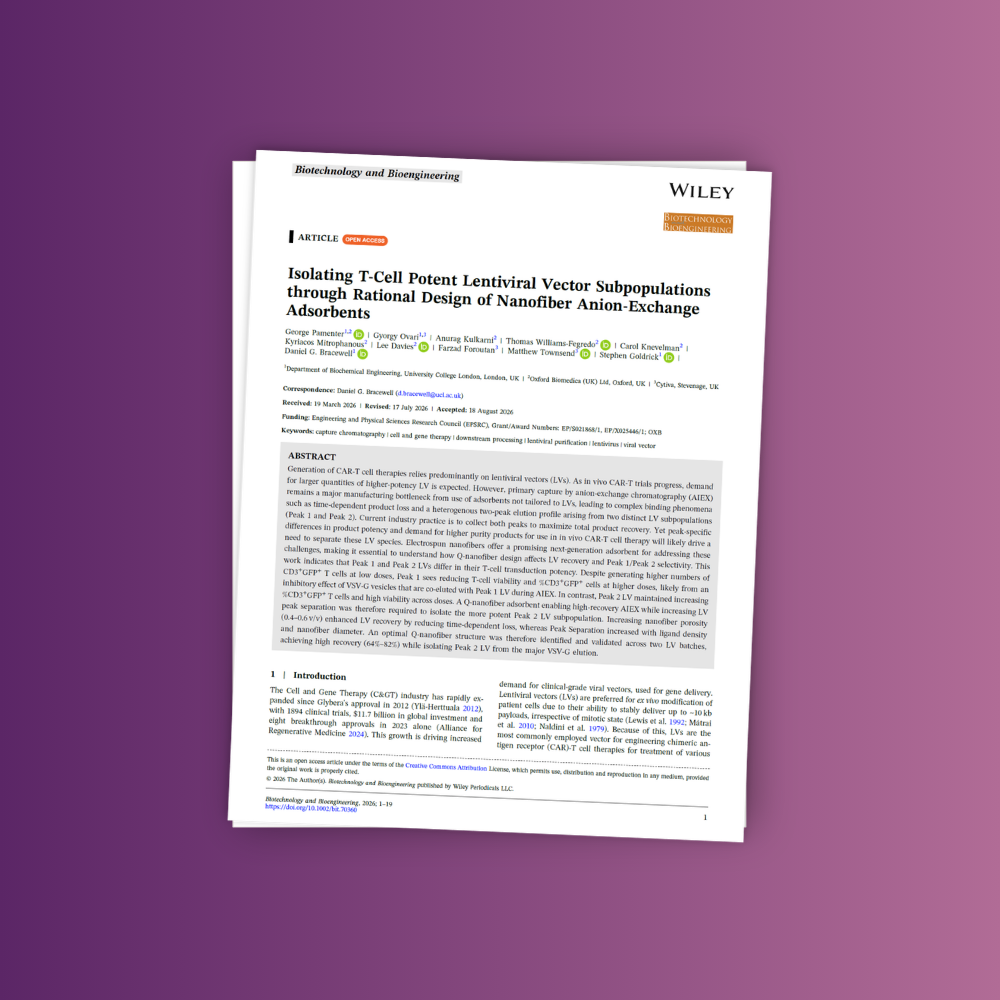
Isolating T-Cell Potent Lentiviral Vector Subpopulations through Rational Design of Nanofiber Anion-Exchange Adsorbents
Lentiviral vector purification remains a key challenge in CAR-T manufacturing, with conventional anion-exchange chromatography often producing heterogeneous vector populations that differ in potency and purity. This paper investigates the biological differences between these vector subpopulations and demonstrates how an optimized Q-nanofiber chromatography platform can improve recovery while selectively isolating the more potent lentiviral vector fraction.
What you’ll learn:
- How lentiviral vector subpopulations generated during anion-exchange chromatography differ in transduction performance
- Why co-eluting VSV-G vesicles may impact vector potency and T-cell viability
- How Q-nanofiber adsorbent design influences vector recovery and peak separation
- Which nanofiber characteristics enable selective isolation of the higher-potency lentiviral vector population
- How optimized chromatography can support the purification needs of next-generation in vivo CAR-T therapies
Why it matters:
As demand grows for higher-quality lentiviral vectors in advanced cell and gene therapies, improved purification strategies will be essential for maximizing product performance, recovery, and manufacturing efficiency. These findings provide valuable insight into lentiviral vector heterogeneity and offer a path toward more effective downstream processing approaches. Read the full paper to explore the methodology, results, and implications for lentiviral vector manufacturing.